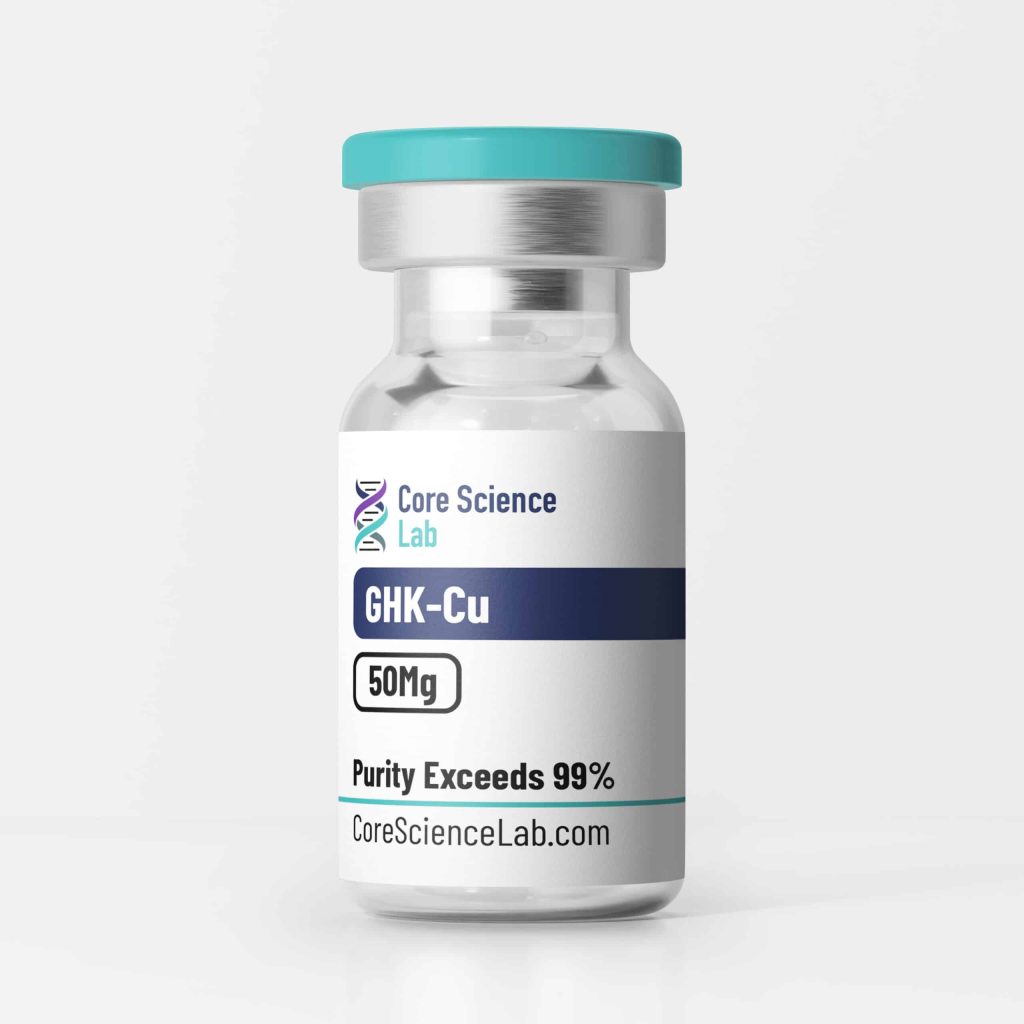
GHK-Cu Copper Peptide (50mg)
$ 49.50
Description GHK-Cu (Glycyl-L-histidyl-L-lysine copper complex) is a synthetic form of a naturally occurring human tripeptide that possesses a high binding affinity for copper (II) ions. It is widely utilized in research to investigate tissue remodeling and skin regeneration through the modulation of multiple cellular pathways. Distinct from simple copper salts, the GHK-Cu complex functions as a delivery system and a modulator of gene expression. Research indicates it influences genes relevant to nervous system function and cognitive decline. In laboratory settings, it is frequently employed to study the stimulation of connective tissue accumulation, angiogenesis, and the regulation of oxidative stress in various tissue models. Biochemical Characteristics Chemically, GHK-Cu is defined by its ability to facilitate the uptake of copper into cells, which is essential for the function of numerous enzymes involved in collagen synthesis and antioxidant defense. Sequence/Structure: Tripeptide (Gly-His-Lys) chelated with Copper (Cu2 ). Permeability: Studies utilize various carrier systems, such as liposomes, to enhance the permeation and retention of GHK-Cu in target tissues for cosmetic and therapeutic modeling. Stability: The complex exhibits potent antioxidant properties and is capable of preventing metal-induced protein aggregation. Specificity: GHK-Cu modulates a broad spectrum of human genes, capable of resetting gene expression patterns in cancer cell lines such as MCF7 and PC3. Chemical Properties Property Specification Molecule Name GHK-Cu (Copper Peptide) Synonyms Glycyl-L-histidyl-L-lysine-Cu2 ; Copper Tripeptide-1 Sequence Gly-His-Lys·Cu Molecular Formula C₁₄H₂₂CuN₆O₄ (Complex) Molecular Weight ~401.91 g/mol (varies by salt/hydration) Form Lyophilized Powder (Blue) Purity ≥99% (Verified via HPLC) Solubility Soluble in water Documentation COA available per lot; SDS available